

Many industries rely on electricity to run most of their chemical processes. Apart from providing power for lighting, it produces essential materials. One of the main ways industries manufacture these everyday substances is through electrochemical decomposition, the process of splitting compounds using electric energy. The products of these reactions, include pure metals, hydrogen gas, and chemicals.
Electrochemical decomposition requires a stable flow of electricity. However, most industries get AC (Alternating Current) power from the grid, which is then converted to DC (Direct Current) power. AC power constantly changes direction, making it unsuitable for electrochemical decomposition. This is where the rectifiers come in. They convert AC to DC energy and control the power passing through them.
Without these crucial components in the circuit, electrorefining would not be possible. The best rectifier systems operate with low energy consumption to improve production while reducing maintenance costs.
The Role of Electrolysis in Industrial Chemical Production
The chemical industry relies on electrolysis to separate compounds using electricity. It is vital in extracting valuable elements like caustic soda, hydrogen production, and metal refining.
Chlorine and Caustic Soda
The chlor-alkali process splits salty water or brine into chlorine gas, caustic soda, and hydrogen gas. Special electrolytic confinements like membrane cells are most commonly used in industries today.
- At the Anode (positive electrode), chlorine ions lose electrons to form chlorine gas.
2Cl– → Cl2 + 2e–
- At the negative electrode, molecules of water gain electrons, releasing hydrogen gas and hydroxide ions.
2H2O + 2e– → H2 + 2OH–
The hydroxide ions produced at the cathode react with sodium ions from the brine to form caustic soda or sodium hydroxide.
Hydrogen Production
The electrochemical decomposition of water is the most efficient and clean way to produce hydrogen gas with renewable energy. Traditional forms of production, like stream methane reforming (SMR), release carbon dioxide by burning fossil fuels.
- At the Anode: Water loses some electrons to form oxygen.
2H2O → O2 + 4H+ + 4e–
- At the Cathode: Hydrogen ions gain electrons, releasing hydrogen gas.
4H+ + 4e– → 2H2

Aluminum Production
Industries extract aluminum using the Hall-Heroult process, which involves electro-refining molten aluminum oxide (Al2O3) mixed with cryolite (Na3AIF6) to lower its melting point. This step requires a lot of electricity and is how most of the world’s aluminum is made.
- Aluminum ions gain electrons at the negative electrode to form liquid aluminum at the bottom.
Al3+ +3e − →Al
- Oxygen ions lose electrons at the positive electrode to form oxygen gas. The gas then reacts with the carbon anodes to release carbon dioxide gas.
2O2−→ O 2 + 4e−
Electrochemical Metal Refining
Most metals, like copper, silver, and gold, are purified through electrorefining. The process removes impurities from metal by adding it to a solution with two electrodes. When high power is supplied, pure metal is deposited on one of the electrodes while the other removes the impurities.
- At the Anode (Impure copper): Copper dissolves into the solution as copper ions.
Cu → Cu2+ + 2e–
- At the Cathode (Pure copper sheet): The copper ions gain an electron to form solid copper.
Cu2+ + 2e– → Cu
The impurities collected at the anode can be particles of gold, silver, or other metals. This can also be collected and processed.
Why Rectifiers Are Essential in Electrolysis
Although rectifiers mainly convert AC to DC, their benefits extend beyond this functionality. They help manage power fluctuations to ensure optimal conditions for chemical reactions. This section highlights why converters and rectifiers are vital in electrochemical decomposition.
Conversion of AC to DC for Electrolysis
Electrochemical decomposition is only possible with DC. However, most of the power in the supply grid is AC, which is unsuitable for the chemical reaction. A rectifier converts AC into DC by ensuring a continuous electrical supply. With AC power, the fluctuating current would disrupt the movement of ions.
Voltage and Current Regulation
As explained above, each electrolysis process requires a specific amount of power to operate optimally. Low voltages may not initiate the reaction, while high power might lead to overheating and damage to the equipment. Rectifiers stabilize the power supply by controlling the current and voltage running through the system. Proper regulation ensures improved quality and prevents power wastage.
Energy Efficiency and Cost Reduction
Industries spend much money on electricity, especially in processes like electrorefining. If equipment wastes this valuable resource, it can lead to high operational costs. Converters and Rectifiers optimize power consumption by allowing only the required electricity to pass through. Efficiency also reduces environmental impact because less energy goes to waste.
Reducing Harmonic Distortion and Electrical Noise
Irregular fluctuations of power in an electrical system can produce Harmonic distortions. This electrical noise can lead to unstable reactions or inconsistent product quality during electrochemical decomposition. Properly designed Rectifiers smooth out these distortions and also prevent interference from other nearby equipment. Less noise or distortions ensure reliable and efficient electrolysis.
Extending Equipment Lifespan and Reducing Maintenance
The equipment used for electrorefining processes is expensive and requires frequent repairs or replacements. An unstable electrical supply can damage or affect electrical circuits, electrodes, and cables. Rectifiers prevent fluctuation or sudden voltage spikes to help reduce wear and tear. With proper converters and rectifiers, industries can avoid unnecessary downtime and focus on the critical bits.
Types of Rectifiers Used in Industrial Electrolysis
Here are the different types of rectifiers used in industrial electrorefining, depending on the electrolyzer’s specific needs.
Thyristor-Based Rectifiers (SCR Rectifiers)
These rectifiers use Silicon-Controlled Rectifiers (SCRs) or thyristors to convert AC to DC. The process starts with AC from the power supply and then goes through the SRCs, which act as gates. These thyristors only allow current to pass when a ‘trigger’ is given. A signal to the trigger can control the DC voltage output.
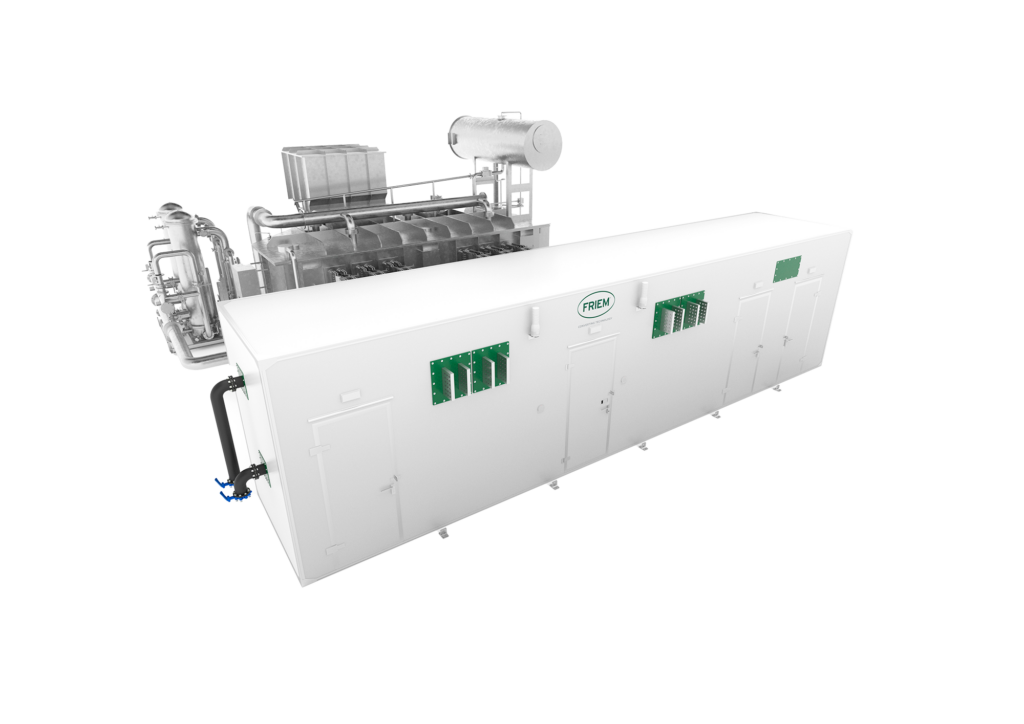
FRIEM’s HyRec Scale is an industrial rectifier developed using thyristor technology. A unit can power multiple electrolyzers with up to 60 MVA per PSU. Developed from the core functionalities of chlor-alkali systems, it is mainly used to power alkaline electrolyzers.
Features
- Good current and voltage control – By controlling when the gates allow current to pass, the amount of power that goes through the electrochemical decomposition process can be controlled.
- Supports efficently High Power – Thyristors can withstand thousands of volts and amps during operation, making them ideal for heavy-duty operations like metal extraction and hydrogen production.
- Reliable – Besides being able to work under high power, thyristors are rugged, allowing them to operate for long periods in harsh environments.
IGBT-Based Rectifiers
Insulated Gate Bipolar Transistors (IGBT) have fast electronic switches that convert AC to DC power automatically. When AC power comes in, it is converted to high-frequency pulses using the IGBT switches, which rapidly turn on and off. Special circuits with various types of capacitors and inductors smooth out the fluctuations.
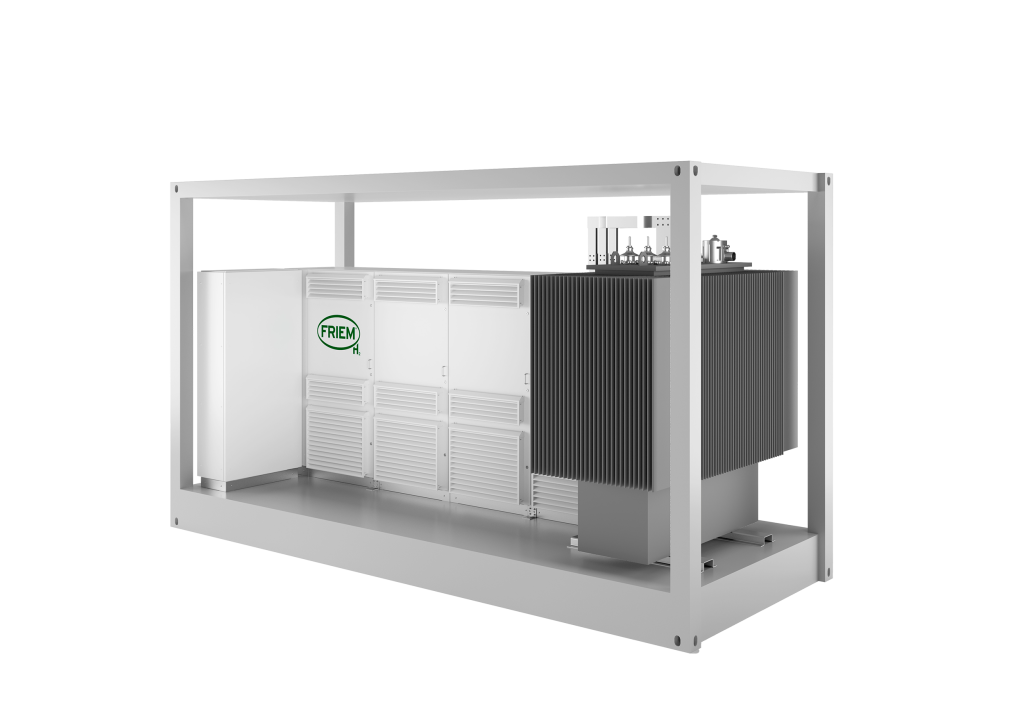
The HyCon Station from FRIEM is a multi-level IGBT inverter technology offering solutions for industrial chemistry environments. It is built with a forced-air cooling system for optimal outdoor performance. The unit also has AFE technology, which enables high-performance power conversion without the need for additional filters.
Features
- Power Quality – IGBT-based rectifiers generate less Harmonic distortion and because of the high-frequency switching and internal filtering systems. This allows to avoid external Harmonic Filters or Power Factor Improvement Systems to improve the power quality.
- Lightweight and Compact – The rectifiers do not need a huge transformer or additional equipment for Power Quality improvement during operation. Most IGBT-based rectifiers systems are lightweight and compact.
- Stable DC output – Thanks to the High frequency and integrated circuits, the IGBT-based rectifier can smooth the current to provide a low ripple on the output voltage. The rectifiers are, therefore, ideal for high-precision electrorefining and battery charging in industrial chemistry applications.
Multi-Pulse Rectifiers
As the name suggests, this type of rectifier has multiple sets of rectifiers that convert AC power to a more stable DC. It starts by taking power from a three-phase supply and then passes it through a set of diodes or thyristors arranged in parallel. Each set processes a different part of the AC cycle, and the more pulses (6, 12, 24, …), the smoother the DC output.
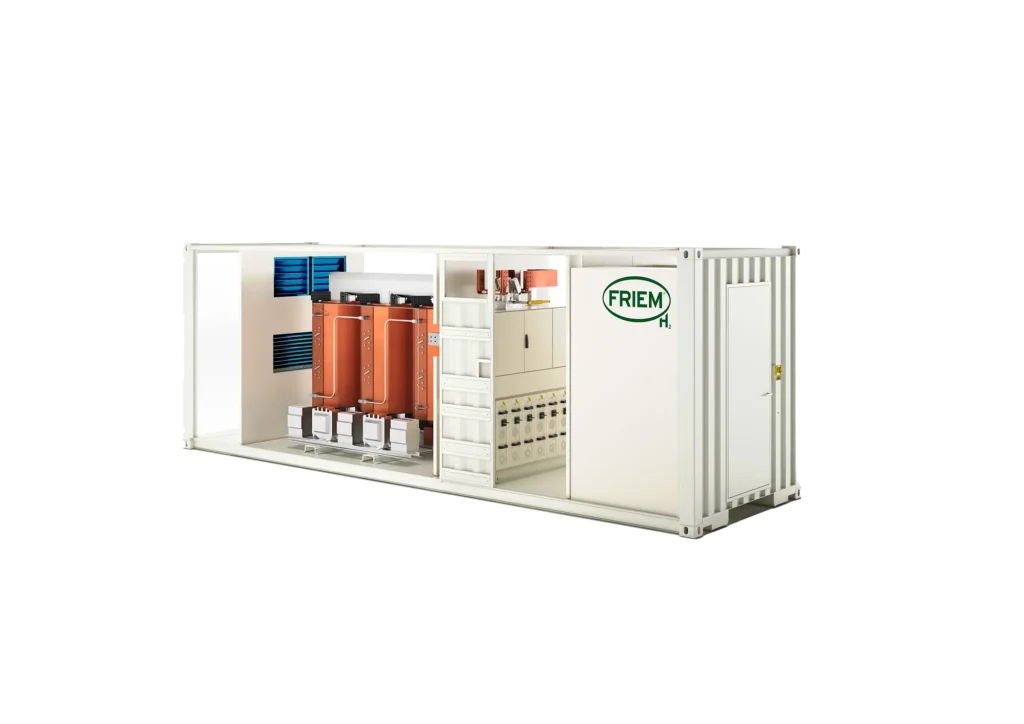
FRIEM’s HyRec Station is a multi-pulse rectifier built with SCR technology. The power station has 6/12 pulses per unit, which can be expanded to multiple units. It provides high DC while keeping its environmental footprint compact. Another station with multi-pulse rectifiers is the Hydue Station with 12 pulses.
Features
- Less Harmonic Distortions – The multiple bridges in these rectifiers receive AC voltage through phase shifting. This causes the harmonics generated to cancel out, reducing distortions.
- Steady DC Output – Multi-pulse rectifiers with more pulses reduce the ripple or fluctuation in the DC output. This ensures a constant power output, which is better for most industrial electrochemical decomposition processes.
- Handles High-Power Loads – Multi-pulse rectifiers handle more power than the other two types of rectifiers in this list. They are suitable for electrochemical decomposition plants that require megawatts of power during operations.
FRIEM has developed several types of rectifiers for different purposes and industries. These pieces of equipment offer reliable performance in various environments. However, individual requirements are crucial for the perfect electrorefining power rectifiers.