

The industrial sector plays a vital role in the global effort for a sustainable future, finding new ways to reduce its carbon footprint. One of the most effective ways of doing so is to reduce energy consumption, in which context, power converters are strategic allies. As the name suggests, they convert power from different sources, reducing both consumption and emissions while improving efficiency across different processes.
Given the environmental impact of industrial activity, the sector is under considerable pressure to cut emissions. Thankfully, new energy management technologies are emerging, and some of them are truly game-changing. Learn more about them below.
The role of power converters in industrial energy efficiency
The costs of inefficiently handling energy systems are self-evident: the bills go up as productivity goes down. Worse still, wasteful power supply management significantly increases the carbon footprint. Alone, the energy waste coming from manufacturing industries corresponds to 17% of yearly global emissions. Sectors like iron, steel, cement, concrete, and chemicals also have considerable carbon footprints.
Thankfully, today’s technology is up to the challenge. Nearly 70% of the energy that reaches final users comes from converters. In this context, energy efficiency means burning less fossil fuels to keep things going. That’s why it’s so important to integrate renewable sources like solar and wind power.
Indeed, converting energy from different sources with minimal waste is a massive challenge. The best options can handle variations in environmental conditions, improving fault tolerance and overall reliability. Power converters help industrial plants maintain specific voltages and frequencies even during sudden spikes, preventing damage to appliances and disruptions on the production line.
Additionally, they are essential for integrating renewable sources into the main grid, autonomously powering an array of industrial processes. As many industries strive for more sustainability, the demand for power converters is rising worldwide. Last year, this market was valued at over USD 15 billion and will likely keep growing for the next decade.

How power converters reduce energy consumption
It’s impossible to convert power from different sources without losing some of it. So, the keyword here is “efficiency,” as these converters should lose minimal fuel while converting gas into electricity, for instance. Indeed, reducing waste is one of the primary goals for companies to use advanced technologies, clever designs, and solid loss management systems.
There are many ways to improve efficiency in the energy system. Component losses like burned capacitors, inductors, and semiconductors can severely impact the system’s performance. Upgrading these components to more resistant materials can mitigate such impact. Hybrid solutions have also shown outstanding results, involving combustion engines and SOFCs (solid oxide fuel cells) working together to maintain the grid’s stability, which is one of the main challenges of integrating varied energy sources.
Regarding stability, it’s necessary to observe the power factor, that is, the metric defining how efficient the system is. The power factor is calculated by the ratio of received power from the source and how much was usefully spent. Ideally, the ratio is 1, but there’s always some waste, mostly caused by harmonics or reactive power.

That’s why sustainable factories resort to Power Factor Correction (PFC) to reduce losses related to such causes. Indeed, reactive power and harmonics can create problems like heating specific parts of the grid, risking damage, and malfunction. PFC equipment reduces energy consumption by compensating for the reactive power on the line while improving grid stability.
Power conversion is also central to building efficient electric vehicles. In this context, automotive companies use variable speed drives (VSDs), devices designed to convert a fixed AC voltage into a variable AC voltage powering the motor. However, VSDs are also incredibly useful for varied industries, controlling compressors, fans, pumps, and other machines related to varied speed operations.
Since 1950, FRIEM has provided top-notch power-converting solutions for industrial purposes. During this period, FRIEM has built over 3,000 power rectifiers, totaling a production capacity of over 2 GW. Nowadays, FRIEM works in more than 80 countries across five continents, powered by a highly trained pool of professionals ensuring that excellence is delivered on each device.
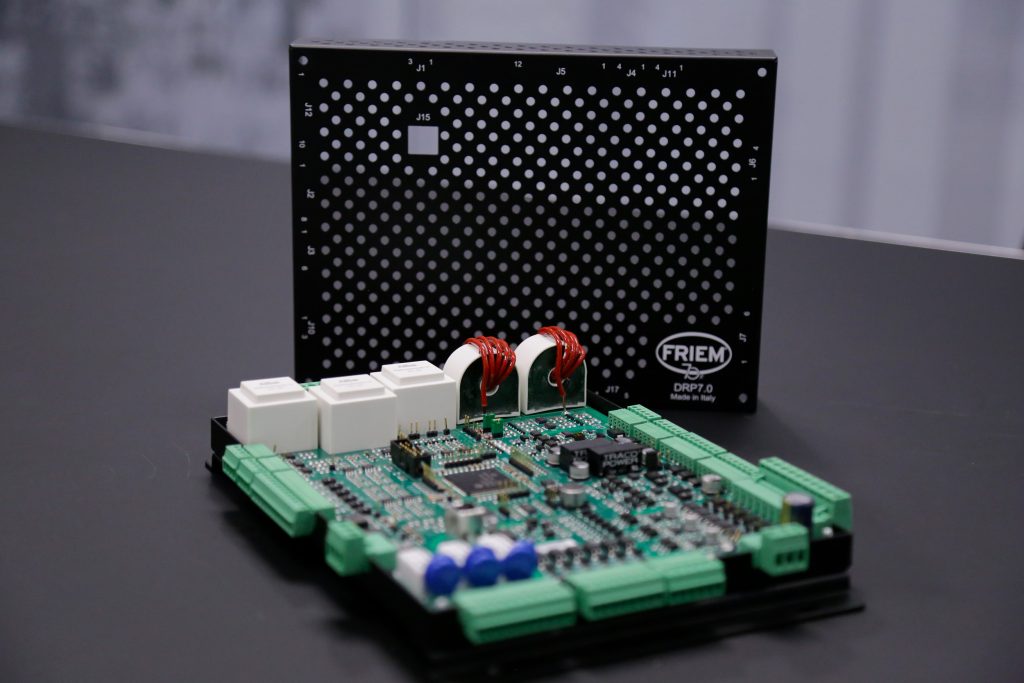
The new generation of FRIEM’s power rectifiers is built for sustainability, working perfectly for green hydrogen production. The DRP 7.0 is one of the best examples of the company’s technological innovation and forward-thinking. This fully digital current regulator ensures optimal performance with both thyristor and diode rectifiers, and delivers outstanding precision with a regulation accuracy of 0.1%, resulting in higher production output and improved power quality. Additionally, FRIEM’s proprietary design features an internal water-cooled system that includes both the AC and DC busbars, enhancing efficiency, reliability, and thermal stability. More importantly, FRIEM’s technical support goes well beyond the point of sale, offering lifetime service assistance.
Sustainability benefits of power converters
Companies and countries worldwide have been striving to achieve the net-zero emissions target set by the Paris Agreement, for which energy efficiency is a mandatory feature. It means achieving optimal usage of all sources and loads of energy, which should be seamlessly integrated into the same grid. The principle is pretty straightforward, but it takes a lot of technology to materialise it.
Electronic power converters are crucial in this context, as they can handle different renewable energy sources and add them to the grid. It means less consumption and dependency on fossil fuels, resulting in more sustainable industrial operations, reduced carbon footprint, and reduced energy bills. Additionally, they help build resilience against disruptions and sudden fluctuations on the power lines.
Indeed, the benefits are many. For instance, companies that harvest solar energy (which is stored in batteries) can use this energy to power their machinery. So, they’ll use considerable energy from power distribution companies, directly impacting operational costs. Better still, they’ll replace the energy from the main power lines (mostly backed by fossil fuels) with a green and renewable source, improving sustainability in daily operations.
Arguably, solar power is the most popular option for industrial purposes, but it’s not the only one. Wind turbines can generate enough electricity to power even the most energy-demanding industries. Wind parks can be installed onshore or offshore, depending on various factors, like available area, landscape, and optimal usage of wind currents.
It’s also possible to set up a small-scale hydro powerplant in remote areas with access to rivers. Energy integration is the key to a greener future for high-pollutant industries, promising meaningful financial and environmental impacts. Thanks to power converters, industries can combine such sources, drastically reducing their dependency on the main power lines.
Future trends in power conversion for industrial sustainability
Power converters have been around for a while; the first model was built in 1902. Naturally, technology has greatly changed over the past century, increasing capacity and efficiency. However, developments in electronics and digital technologies can add ground-breaking features to these converters, like artificial intelligence, machine learning algorithms, big data analysis, and IoT.
Recent breakthroughs in semiconductor technology have allowed for the creation of gallium nitride (Gan) and silicon carbide (SiC) semiconductors, which can handle much higher frequencies while significantly reducing power loss. Computational technology has also come a long way, with AI-backed software and IoT (the Internet of Things), which can automatically manage converters based on real-time data for optimal control, and smart grid integration.
Innovative solutions will likely include AI-backed features in the design, improving performance in drive systems with smart computation modelling. In fact, most modern manufacturers use AI tools even during the design process, crunching data from existing data to suggest the best options for the topology, components, and parameters for new converters, tailoring a solution according to the client’s request.
The new generation of wide bandgap semiconductors (WBG) overcomes old challenges for power converters. GaN and SiC options deliver superior performance and handle high power densities. Overall, they’re much more efficient than silicon-based semiconductors and also have considerably smaller designs.
Converters that use WBG semiconductors can switch frequencies and speeds much faster, too, allowing for more compact passive components. SiC-based devices have demonstrated outstanding reliability under high temperatures, and they also use compact heat dissipation technology. Meanwhile, GaN-based semiconductors provide superior switching speeds in lower power systems.
Efficient power converters are vital for integrating different energy storage systems (ESS), like batteries, into the main grid. Battery technology has also received considerable developments over the past few years, resulting in more efficient sodium-ion and lithium-ion storage devices.
Powered by supercapacitors and controlled by smart technology, these batteries are much more cost-effective compared to the previous generations. Intermittent sources of power, like solar and wind, require refined technology from storage systems, which can be overloaded or run empty, depending on environmental conditions. Such systems can also preserve the excess of energy generated by renewable sources, considerably reducing losses.
Energy efficiency can be further enhanced by regenerative power systems that prevent the waste of valuable resources. Braking systems in electric vehicles provide a clear example: harnessing kinetic power from the brakes to charge up batteries. The same principle can be used to handle the typical fluctuations in renewable energy systems, using DC/DC converters to improve control. Regenerative power systems have a massive impact on energy consumption and operational costs.