

Producing high-purity graphite requires extreme heat treatment processes that exceed 2,500°C, making power control a critical factor for quality, efficiency and operational stability.
In graphitization furnaces, even small variations of temperature or current can compromise crystalline structure, increase energy losses, and reduce process repeatability. For this reason power converters play a central role in managing the large direct currents required while adapting in real time to rapidly changing furnace resistance.
Advanced power conversion technologies enable precise heat treatment in graphitization processes, improving energy efficiency, material consistency, and long-term furnace reliability across industrial applications.
What Is Graphitisation?
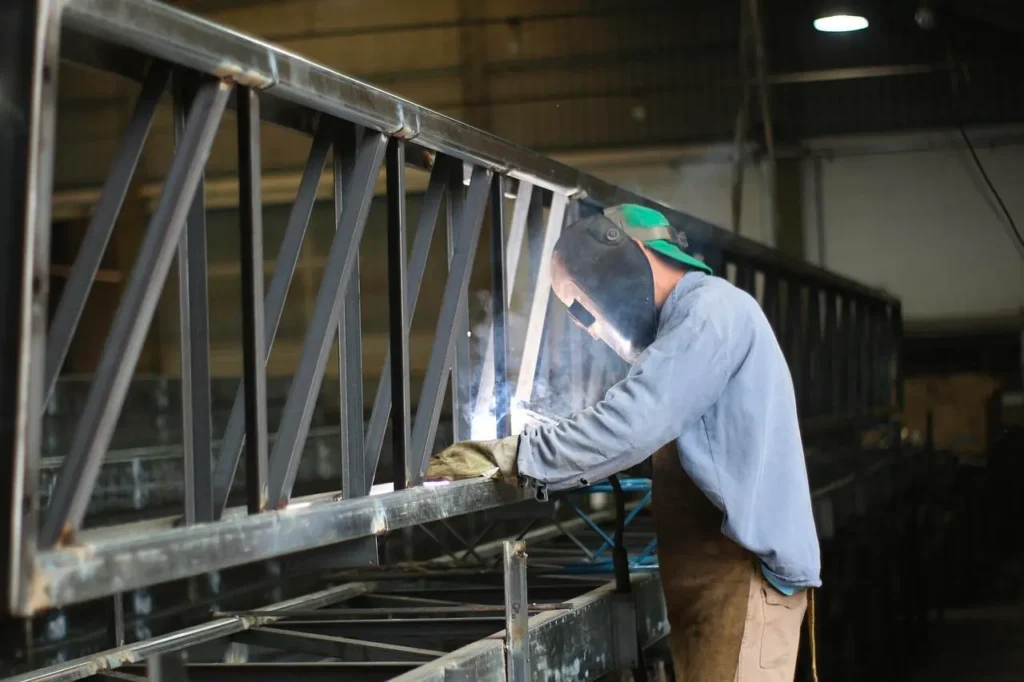
Graphitisation is a high-temperature heat treatment process in which carbon precursors, such as petroleum coke, are transformed into crystalline graphite structures. In their initial state, carbon-based materials used for graphitisation have a largely disordered internal structure. As the temperature rises beyond approximately 2,500°C, the supplied thermal energy allows carbon atoms to progressively rearrange into a more ordered configuration. This transformation leads to the formation of layered graphite structures, in which atoms are aligned in repeating patterns.
As structural order increases, electrical resistance decreases and thermal conductivity improves, two key properties required for high-performance industrial applications. At the same time, volatile impurities are released or migrate toward the surface of the material, where they can be removed, resulting in high-purity synthetic graphite that, in certain uses, can match or exceed the performance of natural graphite.
Temperature is the dominant factor controlling this transformation. Below about 2,000°C ,the structural reordering remains incomplete and material defects persist just above 2,500°C, the graphite structure approaches a stable, highly ordered state maintaining these extreme conditions over long processing times requires large direct currents, while the electrical resistance of the furnace can change significantly as heating progresses. Power converters must therefore provide precise and responsive current control to avoid thermal instability and to ensure uniform material properties throughout the graphite block, from the core to the surface.
Industrial Applications of the Graphitisation Process
High-temperature heat-treated synthetic graphite is the basis for several strategic industrial applications that require exceptional electrical, thermal, and mechanical performance. In electric steel production, large graphite electrodes carry hundreds of kiloamps, to generate electric arcs capable of melting steel scrap. In lithium-ion batteries, specially engineered graphite powders are used as anode materials, where controlled microstructure and purity are essential for efficient lithium-ion storage during charging and discharging cycles.
Speciality graphite components are used in aerospace and semiconductor manufacturing, where materials must withstand corrosive environments, rapid thermal cycling, and extreme operating temperatures. Across these applications, graphite is processed in high-temperature resistance furnaces, with power converters delivering the precise control needed to maintain stable temperatures and uniform material properties.
Key Challenges in Graphitisation Heat Treatment
Graphitisation heat treatment presents several critical technical challenges, primarily related to energy consumption, temperature control, and material integrity.
Graphitisation furnaces are extremely energy-intensive. A single industrial furnace can consume more than 40 MW of electrical power, so even small efficiency losses translate directly into wasted energy and increased carbon emissions. Reducing electrical losses is therefore essential for both operational cost control and sustainability performance.
Temperature control represents another major challenge. Excessive temperatures can degrade the mechanical strength of graphite or promote the retention of unwanted residues, while insufficient temperatures result in incomplete graphitisation and non-uniform material properties. Maintaining a stable and accurate thermal profile throughout the process is critical to achieving consistent product quality.
In addition, repeated heating and cooling cycles place significant mechanical stress on both the graphite blocks and furnace components. As graphite expands and contracts, poorly controlled power variations can damage supports, accelerate wear of heating elements, or even cause electrical faults. High-quality power converters mitigate these risks by providing fast, responsive control, high efficiency, and reliable operation under demanding industrial conditions.
The Role of Power Converters in Graphitisation Heat Treatment
The DC (Direct Current) carbon graphitization process transforms amorphous carbon into a highly ordered crystalline graphite structure by subjecting carbonaceous materials to temperatures up to 3000°C.
During heat treatment, the electrical behaviour of the carbon in the furnace (mainly the resistance) changes continuously as temperature increases. When the furnace is cold, electrical resistance is high and higher voltage is required to initiate current flow. As the furnace heats up, resistance decreases significantly, causing current levels to rise rapidly if they are not properly controlled.
Power supplies with fixed output characteristics are not suitable for this type of process. They risk underpowering the furnace during start-up or overdriving it once steady operating conditions are reached. For this reason, graphitisation furnaces require power converters capable of adapting voltage and current dynamically throughout the entire heating cycle.
Modern power converters continuously regulate electrical output in real time, matching power delivery to the evolving conditions inside the furnace. This dynamic control helps in maintaining stable heating rates and uniform temperature profiles, even when grid conditions fluctuate or when multiple furnaces operate simultaneously within the same facility. Control loops operating on millisecond timescales allow converters to respond quickly to changes in load behaviour, reducing the risk of thermal instability.
Conversion efficiency is another critical factor in graphitisation heat treatment. An improvement from 95% to 98% efficiency may appear marginal, but in a 30 MW installation it corresponds to approximately 1 MW of continuous power savings. Over the course of a year, this can amount to more than 7 GWh of energy saved. Lower power losses also reduce cooling requirements, enabling smaller auxiliary systems, lower water consumption, and fewer unplanned stoppages. As energy efficiency and carbon intensity come under increasing regulatory scrutiny, power conversion performance becomes a strategic consideration rather than a purely operational one.
Key Power Conversion Technologies for Graphitisation
Graphitisation processes rely on several power conversion technologies designed to handle extremely high currents while maintaining precise control and high efficiency.
Direct-current rectifiers are used to supply industrial resistance furnaces with output currents that can exceed 100 kA. In high-power installations, thyristor-based rectifiers remain widely used due to their robustness and proven reliability under demanding operating conditions. Modern systems integrate digital firing control and real-time feedback, ensuring stable operation even when grid voltage fluctuates or when multiple furnaces operate simultaneously within the same facility.
In parallel, advanced semiconductor technologies are further improving power conversion performance. In mid-scale applications, the converters developed by FRIEM achieve conversion efficiencies exceeding 99%, approaching the practical limits of power electronics performance.
Precise control of voltage and current across heating stages is achieved through pulse-width modulation technology. This allows converters to deliver tailored power profiles, from rapid temperature ramp-up phases to stable soak periods, while maintaining repeatable thermal conditions. Accurate modulation also protects valuable furnace loads during long graphitisation campaigns, reducing material waste, extending converter service life, and significantly lowering unplanned downtime.
Power Converters in Different Graphitisation Processes
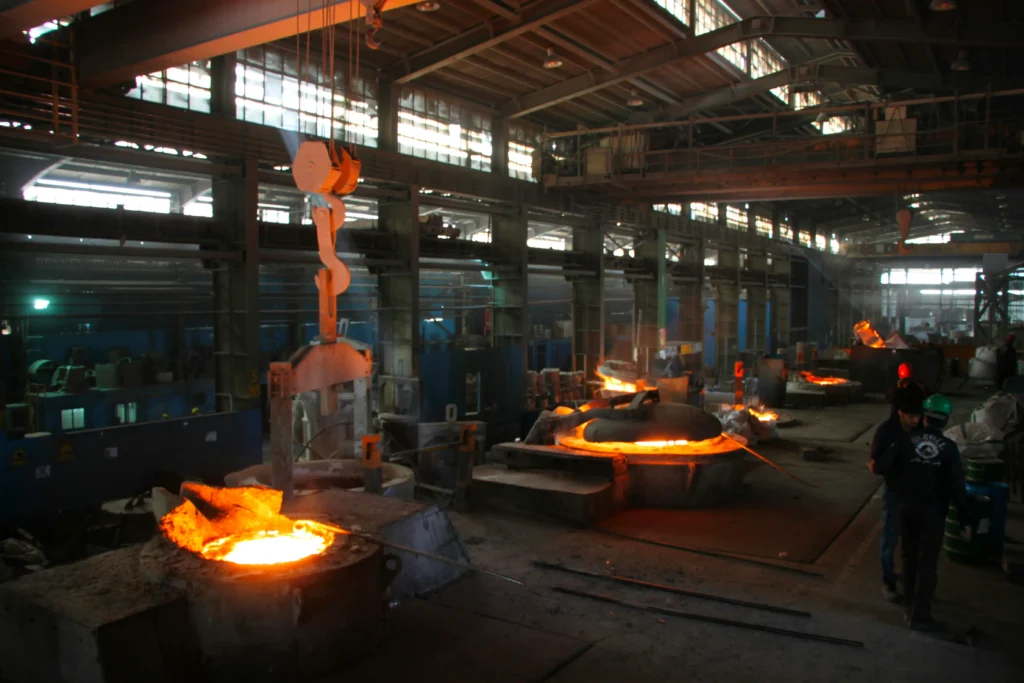
Power converters operate differently depending on the specific graphitisation process and the final application requirements. From large-scale steelmaking to battery material production, each process places distinct demands on current stability, temperature control, and operational continuity. The role of power converters varies significantly depending on the specific graphitisation process.
Graphite Electrode Production for Steelmaking
Graphite electrodes transfer the electrical energy from the power supply to the steel scrap, combining high electrical conductivity with the ability to withstand high temperatures. In electrode manufacturing producers first shape row carbon materials into so-called green rods, which are then heated in a preliminary baking stage to remove volatile compounds and stabilise the structure. The final graphitization heat treatment converts these rods into high-purity graphite and represents the most critical stage of the process.
During this phase, FRIEM’s control system continuously monitors the furnace’s resistance and adjusts current output to maintain a uniform temperature distribution along the electrode length. This controlled heating improves material homogeneity, reduces machining scrap and extends electrode service life when exposed to demanding conditions of electric steelmaking.
Graphitisation for Battery Applications
Graphite anodes used in electric vehicle batteries must meet very tight quality requirements, as their internal structure directly affects battery performance and lifetime. If the graphite structure becomes too coarse, lithium ions move more slowly within the anode, limiting fast-charging capability. If the structure remains insufficiently ordered, the battery degrades faster over repeated charge and discharge cycles.
To achieve the required balance, graphitisation furnaces for battery materials operate at temperatures above 2,500°C within narrow and carefully controlled ranges. FRIEM devices maintain stable current delivery even when grid voltage fluctuates by up to 10%. Real-time temperature measurements from embedded infrared sensors allow the control system to adjust power smoothly throughout the heating cycle.
Plants applying this approach report energy savings of up to 7% per tonne of processed anode material, while maintaining consistent material quality and reliable battery performance.
Synthetic Graphite and High-Performance Applications
Synthetic graphite used in high-performance applications such as rocket nozzles, nuclear moderators, and semiconductors must meet very demanding requirements for purity, porosity, and long-term stability. In these applications, even small deviations in material quality can compromise performance, safety, or long-term reliability.
To achieve this level of quality, graphitisation furnaces processing high-value components often operate continuously for weeks at a time. Under such conditions, process stability becomes critical. Sudden power interruptions or uncontrolled temperature changes can damage or destroy entire furnace loads, leading to significant material losses and high economic impact.
Reliable power converters with stable long-term operation and advanced monitoring and protection functions are therefore essential to support uninterrupted processing and to safeguard both equipment and high-value graphite components throughout extended production campaigns.
Future Trends in Graphitisation Power Technology
Digital technologies are increasingly reshaping how graphitisation furnaces are controlled and operated. One emerging approach is the use of digital twins, which are virtual models that run in parallel with physical equipment. By continuously tracking changes in furnace resistance and operating conditions, these models can anticipate required power adjustments seconds in advance. Early applications indicate improved temperature stability and shorter overall processing cycles.
Integration with renewable energy sources is becoming increasingly relevant for graphitisation processes. High-frequency power converters can increasingly accept input directly from photovoltaic systems or wind turbines, stabilise fluctuating power flows, and deliver controlled energy to the furnace.
As electricity prices vary throughout the day, this flexibility allows energy-intensive graphitisation steps to be scheduled when renewable power is more abundant and economically favourable.
Research is also exploring the use of high-temperature superconducting busbars to reduce resistive losses between power converters and furnaces.While such solutions can deliver substantial efficiency gains for very high currents and long operating periods, they also require energy-intensive cooling systems. Their practical adoption therefore depends on careful life-cycle assessment, balancing higher system complexity against long-term operational energy savings.
How FRIEM Supports the Evolution of Graphitization Power Systems
Graphitisation is among the most energy-intensive and technically demanding heat treatment processes used in modern industry. Achieving consistent material quality at temperatures above 2,500°C requires not only robust furnace design, but also precise and responsive control of electrical power throughout the entire process.
As industrial applications place increasing demands on efficiency, reliability, and product consistency, power converters play a central role in stabilising thermal conditions, reducing energy losses, and protecting high-value loads. In this context, power conversion is no longer a peripheral utility, but a core element of process performance in graphitisation applications.
FRIEM combines over 75 years of experience in high-power rectifier systems with ongoing applied research in power conversion technologies. This approach supports the continuous refinement of converter design, control strategies, and system efficiency in demanding industrial applications.